

Throughout 2025, Pilot Air continued to cement its reputation as an Australian-based thought leader in industrial air compressor technology. Our team has published a series of insightful articles that educate the industry on best practices, emerging technologies, and product choices. From in-depth analyses of rotary screw compressor advantages to guidance on upgrading aging reciprocating units, each blog post informs the compressed air sector. Here we recap eight standout Pilot Air blog posts from 2025 that showcase how we are helping businesses across Australia stay informed and ahead of the curve.
Rotary screw air compressors
One primary focus in 2025 was on rotary screw air compressors, given their growing reputation in industrial applications. In Why invest in a rotary screw air compressor?, we explored why rotary screw models are considered “game-changers” for businesses that rely on compressed air. This article examined the efficiency, durability, and 24/7 reliability of rotary screw compressors, which provide continuous airflow with minimal energy loss, resulting in lower operating costs. It explained how Pilot Air’s rotary screw units are designed for Australian conditions, featuring fewer moving parts that result in reduced wear, quieter operation, and a longer service life. In short, the message was clear: investing in a high-quality rotary screw compressor delivers long-term value through energy savings, increased uptime, and enhanced performance.
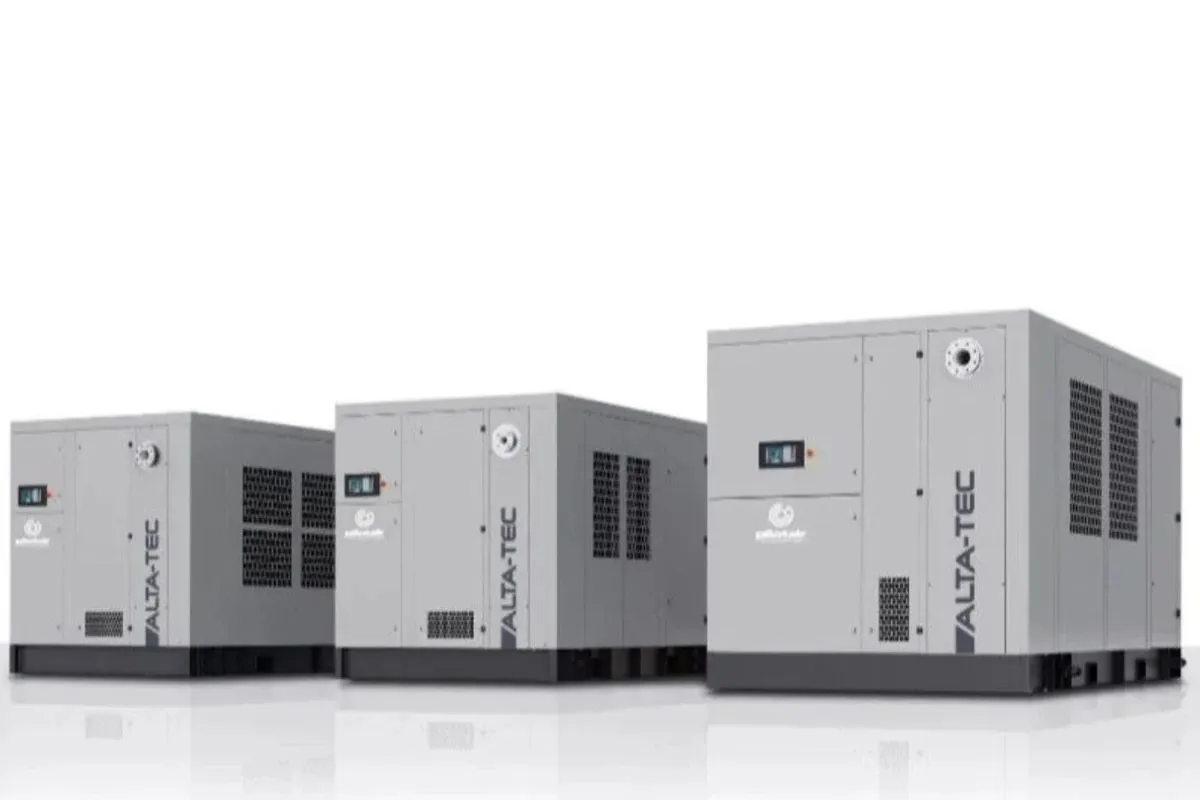
Our article on Industries that rely on rotary screw air compressors showcased the breadth of applications where rotary screws are vital pieces of infrastructure. This blog took readers through several sectors, food and beverage processing, pharmaceuticals, oil and gas, and manufacturing, to illustrate how critical continuous compressed air is to these operations. For example, in food production and packaging, rotary compressors provide continuous air for conveying, cleaning, and fermentation. Meanwhile, in auto workshops and manufacturing lines, they maintain pressure without pressure drops, keeping tools and machines running smoothly. The article emphasised that reliable 24/7 performance and modern efficiency features, like our ALTA-TEC variable-speed series with advanced controllers, make rotary screw compressors the preferred choice in such heavy-duty settings. It also highlighted our role as an experienced partner, with over 60 years in the industry. We provide onshore service, spare parts, and customisation expertise to ensure each industrial customer receives a fit-for-purpose solution.
“Investing in a high-quality rotary screw compressor delivers long-term value through energy savings, increased uptime, and enhanced performance.”
Reciprocating air compressors
At Pilot Air, we also offer one of Australia’s leading ranges of reciprocating air compressors. A highly reviewed blog centred on when to upgrade from a reciprocating to a rotary screw air compressor helped businesses evaluate a common dilemma: whether to stick with a trusty piston compressor or move up to a rotary screw unit. This article acknowledged that reciprocating compressors have long been dependable workhorses for many workshops, ideal for lower-duty cycles and smaller operations. Still, it outlined the tell-tale signs that an upgrade may be due. For instance, companies facing increased air demand, frequent duty cycles, or higher noise and maintenance issues might benefit from the continuous output and efficiency of a rotary screw. The post outlined the cost-benefit considerations of investing in modern rotary technology, including energy savings and reduced downtime.
Our broader guides provided valuable frameworks for decision-making. How to choose the right air compressor is a comprehensive guide that walks readers through assessing airflow requirements, pressure, duty cycle, and air quality needs when selecting a compressor. It compared options like rotary screw versus reciprocating models, explaining that rotary screws are preferable for continuous 24/7 operation, whereas reciprocating units still excel in intermittent-use scenarios. The article explored the decision between oil-free and oil-lubricated machines, as well as fixed-speed and variable-speed drives. By focusing on educational content, we aimed to demystify the selection process and empower businesses to make informed choices backed by our industry knowledge.
Service and customised solutions
A key differentiator for Pilot Air is our service capability and end-to-end project support. Designing an efficient compressed air system explained our approach to compressed air projects. From initial site diagnostics and system design through to local manufacturing, installation and ongoing maintenance, our technical teams consider the layout, piping, air storage, and treatment components to ensure the solution we supply is built for performance and energy efficiency.
Pilot Air’s 360-degree service handles everything as one integrated project. Our technical team conducts on-site assessments to measure demand and future needs, then custom-designs a system tailored to the client. This may involve recommending a rotary screw upgrade, adding receivers to stabilise pressure, or implementing a looped aluminium piping network for even airflow. With local production of tanks and components, we ensure fast delivery and quality control, giving our clients peace of mind knowing that spare parts and support are readily available onshore.
One standout was our story on De Costi Seafoods. This Australian icon relies on a Pilot Air rotary screw compressor to keep its production moving. Our team solved their compressed air challenges; however, it wasn’t just about the machine, it was as much about our supporting role in their success.
“Pilot Air’s end-to-end service ensures every compressed air system is custom-designed for reliability, efficiency and real-world industrial demands.”
Industry insights and innovation
Our year in review wouldn’t be complete without the posts that tackled general industry knowledge and the latest innovations. Pilot Air’s blogging in 2025 ranged from fundamental how-tos to forward-looking technology trends.
On the fundamentals side, Portable vs. Stationary Air Compressors was a popular read, breaking down which type of compressor suits different needs. This article helped readers determine whether a mobile, engine-powered unit or a fixed, electric-powered system would be the better fit for their needs. It discussed use-cases for portable compressors, such as tradespeople moving between job sites, construction crews without access to mains power, or farmers needing air in the paddock. Pilot Air’s own range of rugged, portable models, such as our Honda-powered petrol units and diesel-driven compressors, received a mention. These models are designed for Australian conditions, featuring heavy-duty cast-iron pumps and roll-cage frames.
The article explained how stationary compressors become the “workshop workhorses” for factories, automotive garages and fabrication shops. These larger units, including high-capacity reciprocating models, deliver consistent pressure to multiple tools simultaneously. We also highlighted features such as larger air receivers, advanced cooling, and noise reduction on stationary setups, which make them ideal for continuous use.
At the cutting edge of industry knowledge, Pilot Air addressed how digital technology is shaping the future of compressed air. In Smart Air Compressors & IoT: The Future of Compressed Air in Australia \we explored the rise of “smart” compressors and the impact of the Internet of Things on our field. This forward-looking piece explained that modern industrial compressors are now equipped with IoT connectivity and intelligent controls, enabling features such as remote monitoring, real-time performance analytics, and predictive maintenance alerts.
This selection of 2025 blog highlights shows that Pilot Air is deeply committed to educating the industry and providing customised solutions that address real-world challenges. As we move forward, Pilot Air remains dedicated to leading the conversation in our industry and to empowering our clients with the knowledge and support they need to succeed.
We will be announcing some exciting news in the rotary screw air compressor category in early 2026, and we look forward to sharing it with you soon.
We would like to thank our customers, distributors, and our fantastic team for another exceptional year of supporting the Australian industry with high-quality compressed air solutions.

Australian-built air compressors you can rely on
Pilot Air is one of Australia’s leading suppliers of rotary screw and reciprocating air compressors. Our team is qualified to conduct a diagnostic assessment and install the most suitable compressed air infrastructure with built-in scalability for your immediate needs. Pilot Air is proudly Australian-owned and independent, with onshore maintenance and service, skilled technicians, and a large spare parts inventory. Contact our team today.

