
Google air compressors or ask your AI search bot to help you choose the best air compressor for your needs and you open a huge can worms. There is so much technical information online and stack of salesy based content that you can end up more confused than when you started. In this article I breakdown the difference between a rotary screw air compressor and a piston driven fixed speed model with the aim of dymystfiying the jargon and helping you understand which is a better fit for your needs.
Two primary options
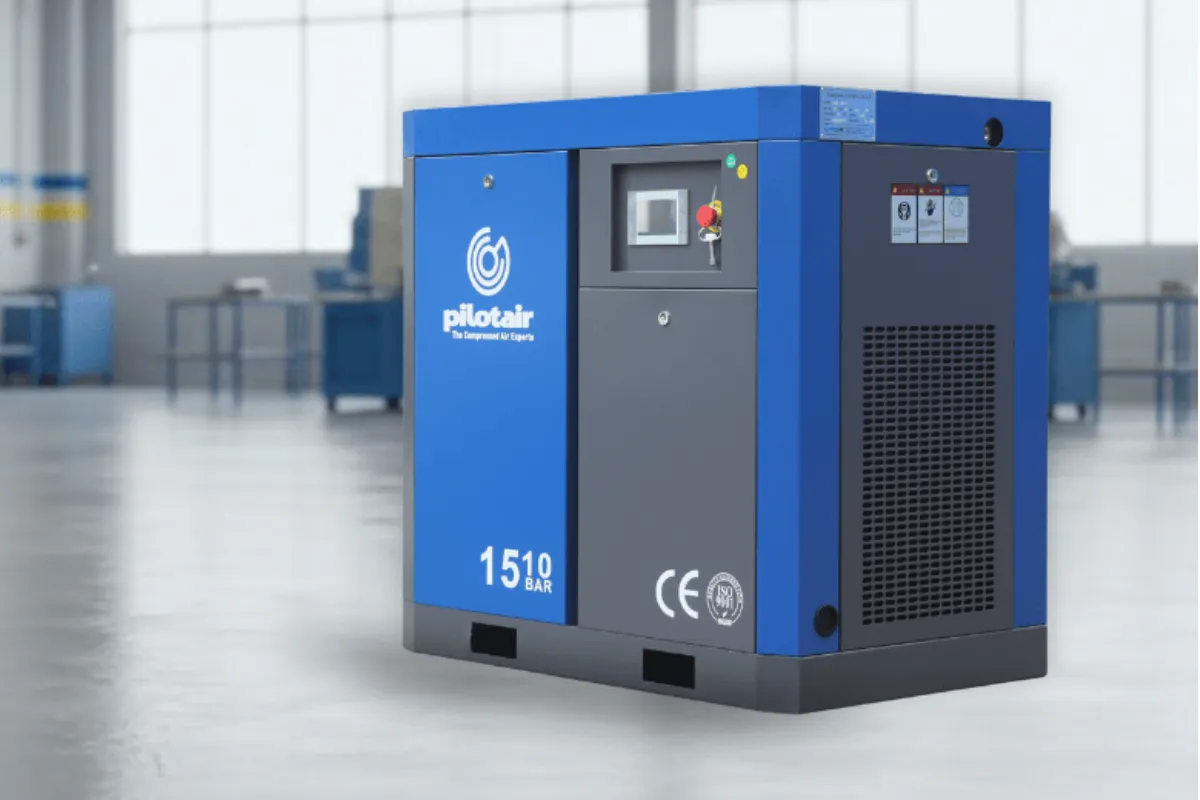
Two of the most common options are piston (reciprocating) compressors and rotary screw compressors. While both have their place, advances in technology, particularly with ranges like Pilot Air’s Next Generation Screw (NGS) and the premium ALTA-TEC range, are making rotary screw compressors a more cost-effective and efficient solution for modern operations.
At a basic level, piston compressors use a reciprocating motion to compress air in a cylinder, similar to an engine. They operate in cycles, drawing in air, compressing it, and then releasing it into a storage tank.
Rotary screw compressors, on the other hand, use two interlocking helical screws to continuously compress air. This design allows for a steady flow of compressed air without the stop-start cycling seen in piston systems.
This fundamental difference shapes performance, efficiency, and suitability across different applications.
“Rotary screw compressors deliver a continuous, energy-efficient air supply, making them a smarter long-term investment for modern businesses.”
Performance and duty cycles
One of the biggest distinctions between these compressor types is how they handle workload.
Piston compressors are typically designed for intermittent use. They perform well in smaller workshops where air demand is occasional, such as running a few tools at a time. However, they require rest periods to prevent overheating and excessive wear.
Rotary screw compressors are built for continuous operation. They can run 24/7 without interruption, making them ideal for production environments, fabrication facilities, and high-demand applications.
For businesses experiencing growing or fluctuating demand, this continuous-duty capability becomes a major advantage.
Not wishing to sound completely negative about piston air compressors, because we do supply them, however, they tend to be less efficient, particularly in applications where demand fluctuates. Their stop-start operation leads to pressure drops, energy spikes, and wasted power.
Rotary screw compressors, especially those with variable speed drive (VSD) deliver significantly better energy efficiency. They adjust output to match demand, reducing unnecessary power consumption and lowering electricity costs over time.
High-quality rotary screw air compressors employ modern efficiency features, such as variable-speed technology, direct-drive systems, and high-efficiency motors. This allows businesses to achieve strong performance while minimising energy usage, making it a highly cost-effective alternative to traditional piston systems.
Noise, vibration, maintenance and reliability
Noise levels are often overlooked when considering an air compressor, but they can have a major impact on workplace conditions. Piston compressors are typically louder due to their mechanical motion and cycling operation. This can make them unsuitable for indoor environments or workplaces where noise reduction is important.
Rotary screw compressors operate much more smoothly and quietly. Their enclosed design and continuous operation reduce vibration and noise levels, creating a safer, more comfortable working environment. For workshops and facilities where compressors are located near staff, this can be a significant benefit.
Maintenance requirements also differ significantly between the two systems. Piston compressors generally require more frequent servicing due to their moving parts and cyclical operation. Components such as valves, rings, and pistons are subject to wear, especially under heavy use.
Rotary screw compressors are designed for durability and longer service intervals. With fewer stress points and smoother operation, they offer superior reliability in demanding environments. For example, the Pilot Air NGS and ALTA TEC range are engineered with industrial-grade components and intelligent control systems, helping operators monitor performance and reduce downtime.
When each option makes sense
While rotary screw compressors offer many advantages, piston compressors still have a place in certain applications. Piston compressors are best suited for:
- Small workshops with low air demand
- Occasional or DIY use
- Budget-conscious, short-term applications
Rotary screw compressors are ideal for:
- Manufacturing and production facilities
- Automotive and fabrication workshops
- Continuous or high-demand environments
- Businesses seeking long-term cost savings
For many growing businesses, the transition from piston to rotary screw is a natural step as air demand increases. If your business falls into this category, chatting with one of our technical advisors is highly recommended. They can assess your facility, usage, power, and scalability, and provide you with qualified air compressor options that ensure you meet your demand and future-proof your operation within your budget.
“Choosing the right compressor isn’t just about today’s needs — expert advice ensures your system is efficient, scalable, and built for future growth.”
Why the NGS rotary screw range Is a cost-dffective upgrade
Historically, one barrier to adopting rotary screw compressors has been the upfront cost. However, the NGS rotary screw range from Pilot Air has been designed to change that. Positioned between entry-level systems and premium high-end ALTA_TEC compressors, the NGS range delivers:
- Advanced efficiency without premium pricing
- Variable speed technology for reduced energy costs
- Reliable continuous-duty performance
- Lower lifecycle costs compared to piston systems
- Scalable options for growing businesses
This makes it an ideal upgrade path for businesses currently using piston compressors but seeking to improve efficiency, reliability, and long-term value through a switch to a rotary screw system.
Selecting between a piston and rotary screw compressor ultimately depends on your air demand, operating hours, and long-term goals.
If your usage is occasional and light, a piston compressor may be sufficient. But for most modern businesses, especially those aiming to improve efficiency and reduce costs, a rotary screw compressor is the smarter investment.
With its balance of performance, energy efficiency, and affordability, the Pilot Air NGS range stands out as one of the most practical and cost-effective solutions available today.

Australian-built air compressors you can rely on
For Australian businesses looking to upgrade their compressed air systems, the Pilot Air NGS rotary screw range offers a compelling combination of efficiency, capability, and value, making it a smart choice for the next generation of industrial operations.
Pilot Air is proudly Australian-owned and independent, with onshore maintenance and service, skilled technicians, and a large inventory of spare parts.
Contact our team today.

