

The costs of doing business are rising, and customers are demanding more for less. Business owners and managers are feeling the squeeze, and capital expense decisions must be carefully considered. Is this the right time? Is this purchase the best possible option? Will it add value to the business now and into the future? Did we get the best advice? – We ask these questions so I am confident you are doing the same.
When your business relies on compressed air, choosing the right air compressor unit tailored to your application is one of those careful considerations. The wrong size, or investing in a constant air unit when a compressor that adjusts to demand is a better option, can derail your investment.
In this article, I walk you through the differences between a rotary screw variable-speed drive (VSD) and a fixed-speed air compressor. However, if you are looking to upgrade your current compressed air system or intall or new one from scratch, speaking with our technical team is highly recommended. Our team will ensure you have the most suitable configuration for now, with built-in scalability to future-proof your operation.
“A mismatch between compressor type and demand can cost far more in energy over time than the initial investment ever saves.”
Understanding the difference
At a fundamental level, both fixed-speed and variable-speed rotary screw compressors perform the same role, delivering a continuous supply of compressed air. The difference lies in how they respond to demand.
Fixed speed compressors operate at a constant motor speed, producing a steady flow of compressed air whenever they are running. They typically cycle between loaded (producing air) and unloaded (idling) modes in response to system demand. This makes them:
- Simple and robust
- Cost-effective upfront
- Ideal for consistent workloads
However, when demand fluctuates, fixed-speed compressors can become inefficient. During low-demand periods, they continue running even when not producing useful air, resulting in unnecessary energy consumption.
Variable speed compressors (VS or VSD), on the other hand, adjust motor speed in real time to match air demand. Instead of switching between load and unload cycles, they continuously modulate output. This provides:
- Precise control of airflow
- Reduced energy consumption
- Lower operating costs in variable-demand environments
VSD compressors come into their own in environments where air usage changes throughout the day, by eliminating the inefficiencies associated with idle running.
Matching the compressor type to the application
When it comes to variable-speed or fixed speed, it is not about which is “better” overall; it’s about which is better suited to the application.
In operations with stable, predictable compressed air demand, fixed-speed compressors are often the most practical and economical solution. Typical industries include:
- Steel fabrication with continuous processes
- Large-scale manufacturing with steady production lines
- Some automotive workshops with consistent tool usage
In these environments, the compressor can operate near full load most of the time, minimising inefficiencies. The simplicity of fixed speed systems also means lower upfront costs and straightforward maintenance.
Where air demand fluctuates, variable speed compressors offer clear benefits.
Typical industries include:
- Joinery and woodworking (machine cycles vary)
- Automotive workshops with intermittent tool use
- General manufacturing with shifting workloads
- Facilities with multiple departments drawing air at different times
In these cases, a fixed-speed compressor would frequently unload, wasting energy. A VSD system dynamically adjusts output, ensuring only the required air is produced.
Precision and energy-sensitive environments
In industries such as food and beverage or pharmaceuticals, compressor selection also involves efficiency, stability, and air quality. Variable speed compressors are often preferred because they:
- Maintain tighter pressure control
- Reduce energy costs over long operating hours
- Integrate well with advanced air treatment systems
However, these facilities may also incorporate fixed-speed compressors as part of a broader system design, particularly where a constant base load exists.
In larger industrial settings, an effective solution is often a combination of fixed-speed and variable-speed compressors. A fixed speed compressor handles the base load (constant demand) while a VSD compressor acts as a “trim unit,” adjusting output to match fluctuations
This hybrid approach maximises efficiency while maintaining reliability, making it a common strategy in large manufacturing plants and complex operations.
A few things to consider when researching a compressed air solution
When deciding between fixed speed and variable speed rotary screw compressors, several factors should be considered:
- Demand profile. Is your air usage steady or variable throughout the day? This is the single most important factor.
- Energy costs. Energy is one of the largest operating expenses for compressed air systems. VSD compressors can significantly reduce costs where demand fluctuates.
- Operating hours. The longer the compressor runs, the greater the potential savings from improved efficiency.
- System complexity. Fixed-speed systems are simpler, while VSD systems offer greater control but require more advanced technology.
- Future growth. If your operation is expected to expand or change, flexibility becomes increasingly important.
The most successful installations start with the right advice. Our technical team only recommend a compressed air solution that is the best fit for your business. They will undertake a comprehensive diagnostic assessment of your facility, if required, and make their recommendations based on data, not margin or stock levels. You can’t underestimate the value of having technical expertise map out, customise and professionally install your compressed air system. Efficiencies improve while outgoings reduce. A mismatch between compressor type and application can lead to ongoing inefficiencies that far outweigh initial cost savings. The right system can save you more than 30% of your current energy costs each year. For high-volume businesses, this adds up quickly.
“Choosing the right compressor isn’t about what’s better overall; it’s about what’s right for your application.”
Summing up
Rotary screw compressors have quickly become essential to modern industry, but choosing between variable-speed and fixed-speed models depends on usage.
- Fixed speed compressors are best for steady, predictable demand
- Variable speed compressors excel in dynamic, changing environments
- Hybrid systems deliver optimal performance in larger or more complex operations
With our expertise, we can help you select a solution that not only meets your needs today but continues to deliver value well into the future.
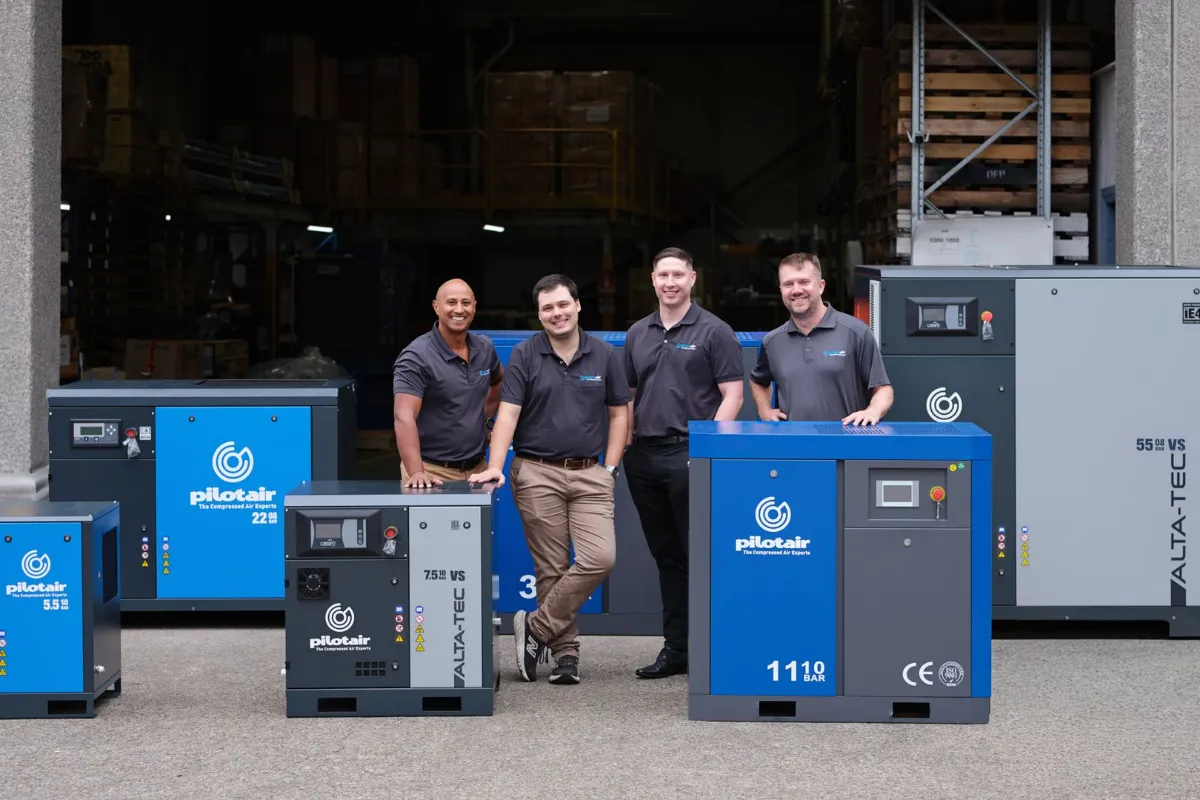
For Australian businesses looking to upgrade their compressed air systems, the Pilot Air range of rotary screw options offers a compelling combination of efficiency, capability, and value. Our team is best positioned to ensure you get exactly what you need for optimum performance.
Pilot Air is proudly Australian-owned and independent, with onshore maintenance and service, skilled technicians, and a large inventory of spare parts.
Contact our team today.

