
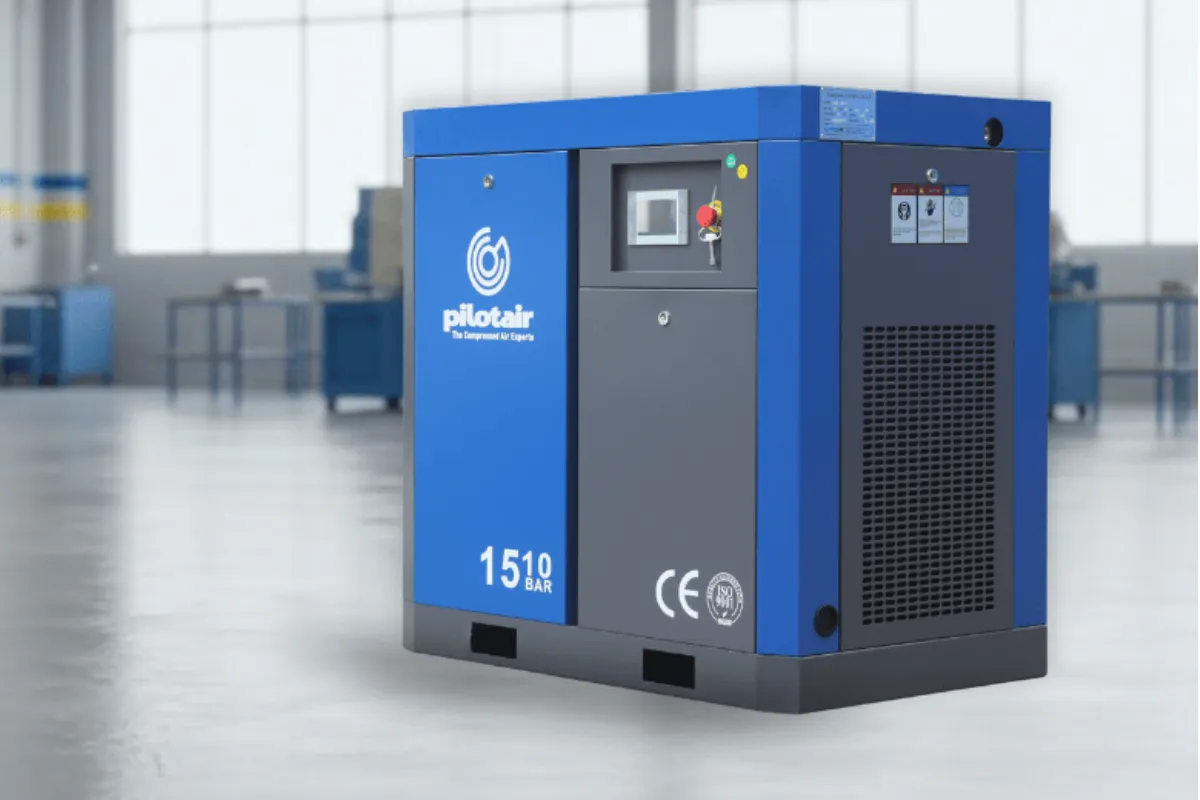
When we introduced the Pilot NGS Next Generation Series, the new sweet spot in rotary screw air compressors, we had a clear objective: to provide Australian businesses with a rotary screw compressor that delivered the technology and reliability that industrial users expect, without requiring a step into a premium-priced solution.
Customer response has exceeded expectations for this market entry.
In workshops, manufacturing facilities, and larger industrial applications, businesses are discovering that the NGS range will dominate the middle ground. Offering a combination of variable-speed technology, quality components, dependable performance, and competitive whole-of-life value, the NGS range is fast becoming our signature offering.
In our Good, Better, Best approach to rotary screw compressors, NGS represents the “Better” option, bridging the gap between our PAC fixed-speed compressors and premium ALTA-TEC range.
The NGS range delivers the technology and industrial reliability businesses need, without requiring a step into a premium-priced solution.
A range designed for Australian air demands
Designed by an Australian-owned compressed air company for Australian air demands.
The NGS rotary screw range includes 15 standalone models covering 7.5kW through to 250kW. NGS can provide solutions for applications ranging from small workshops to manufacturing facilities and high-volume industrial and mining operations. Pressure configurations include 8, 10, and 13 bar, while a specialist 15kW 16-bar model provides a laser-cutting solution ideal for savvy metal fabrication businesses that value performance at the right price.
At the entry point, the compact NGS 7.5 VS delivers 15 L/s at 10 bar and operates at just 62 dB(A). At the other end of the range, the NGS 250 VS delivers up to 725 L/s at 8 bar, illustrating just how broad the NGS platform is.
Importantly, our team work with your business to ensure the right compressor for your needs. Often, it is not about selecting the biggest machine your budget allows. Correctly matching air delivery, pressure and operating characteristics to actual and future demand will have a major impact on performance and operating costs.
Variable speed is a key advantage
A major attraction of the NGS range is variable-speed drive (VSD) technology. As energy costs continue to rise and pressure on businesses to reduce their CO2 emissions increases, VSD technology helps mitigate these issues.
Instead of continuously operating at full output, NGS variable-speed compressors use an inverter to adjust output according to demand. This maintains consistent pressure while reducing unnecessary energy consumption when full compressor capacity isn’t required.
Given that compressed air is a significant component of a facility’s energy consumption, efficiency isn’t just a technical feature. Reducing energy costs is a strategic economic decision that every business is wrestling with year on year.
Technology without the complexity
The value proposition of the NGS is fundamentally about the technology businesses genuinely need. The NGS range incorporates direct-drive variable-speed operation, premium components and MEPS-approved electric motors. Compressor functions are managed by the centralised MAM-6080 electronic controller, providing operators with advanced control over the system.
For businesses replacing an ageing compressor or moving from a smaller piston system to rotary screw technology, these features represent a measurable step forward. An NGS compressor is designed for demanding industrial environments and round-the-clock operation, while remaining accessible to businesses that may not require every feature associated with a premium compressor platform.
More than just the compressor
An air compressor should never be considered in isolation. The performance of the overall compressed air infrastructure depends on factors including pipework, storage, filtration, air treatment, pressure, demand patterns and the location and configuration of equipment.
This is where buying from Pilot Air adds another layer of value to NGS. Our technical team can assess site requirements and use diagnostic data to help determine the appropriate compressor and system configuration. We can then assist with system design, installation, commissioning and ongoing maintenance. NGS compressors are also supported by a three-year warranty, onshore spare parts and nationwide servicing, with Pilot Air supported by a network of more than 50 technical specialists across Australia.
For industrial businesses, that support matters. Compressor downtime can quickly become production downtime, so access to technical expertise and replacement parts is an operational advantage.
The “better” choice is proving its value
The early adoption of NGS has reinforced what we believed when developing the range: there is realistic demand for a high-quality middle-ground rotary screw compressor. While customers want efficient technology and industrial reliability, they also want to know they are investing at the appropriate level for their operation.
From 7.5kW workshops to 250kW industrial applications, NGS gives us the flexibility to provide that balance. If you’re reviewing your existing compressed air infrastructure, expanding production or considering the move to variable-speed rotary screw technology, talk to the Pilot Air team. We can assess your current and future requirements and help determine whether an NGS compressor is the right fit for your business.
From 7.5kW workshops to 250kW industrial applications, NGS delivers the balance of performance, efficiency and value Australian businesses are looking for.

Air compressors you can rely on
For Australian businesses looking to upgrade their compressed air systems, Pilot Air offers a compelling combination of efficiency, capability, and value, making us a smart choice for your next compressed air investment.
Pilot Air is proudly Australian-owned and independent, with onshore maintenance and service, skilled technicians, and a large inventory of spare parts.
Contact our team today.

