
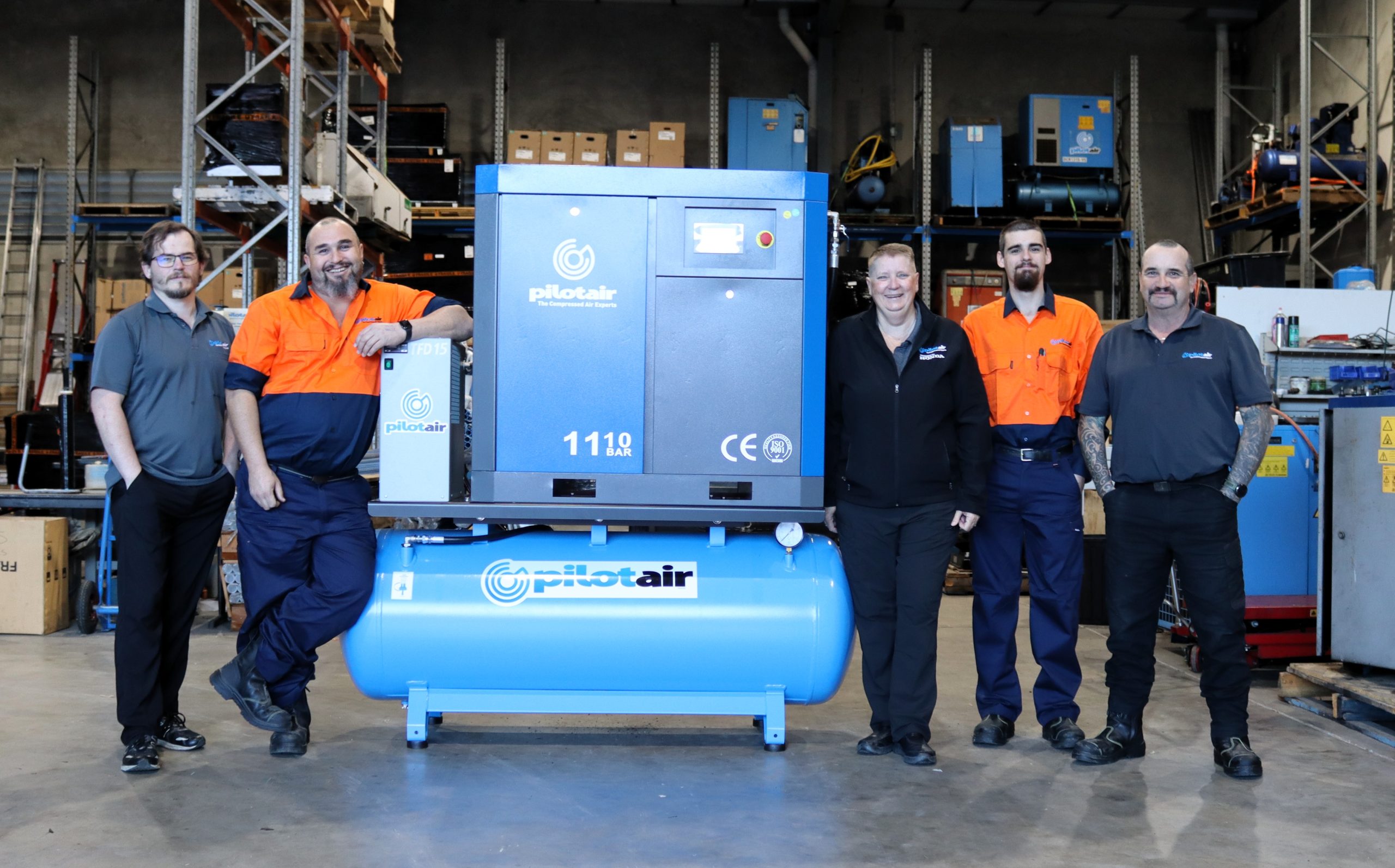
Electricity, gas, water and compressed air are the big four utility expenses in most modern manufacturing facilities. Compressed air is essential, powering automation, production equipment, packaging lines, pneumatic tools and process control systems. Yet despite their importance, compressed air systems are often overlooked as a consumption issue, and without professional configuration, installation, and ongoing maintenance, they can lead to increased energy costs, reduced production efficiency, and unplanned downtime.
At Pilot Air, we’ve worked with Australian manufacturers for more than four decades, and we regularly encounter the same challenges across facilities of every size. The good news is that most of these problems can be resolved with the right technical advice and a whole-of-system approach.
Compressed air problems can be resolved with the right technical advice and a whole-of-system approach.
The wrong-sized compressor
A common mistake is compressor sizing. Choosing a compressor based purely on purchase price or nameplate capacity rather than the site’s actual air demand will create issues. An undersized compressor struggles to keep up during peak production periods. This results in pressure drops and equipment interruptions. Conversely, an oversized compressor may spend much of its time running inefficiently under light loads, consuming unnecessary energy.
The key is understanding how compressed air is actually used throughout the day. Our technical team undertake site assessments that measure flow, pressure requirements, duty cycles and future expansion plans. Making this effort means we supply units that are correctly specified rather than simply estimated. It doesn’t add additional cost but will save you a significant amount over the lifecycle of your compressed air solution.
Ignoring system leaks
Compressed air is one of the most energy-intensive utilities in manufacturing, and reasonable estimates suggest that compressed air systems can account for up to 30% of a manufacturing site’s electricity use, with leakage representing a significant source of waste. Even a well-designed compressed air system can become inefficient if leaks are allowed to develop. Leaks commonly occur around pipe joints, flexible hoses, quick-connect fittings, valves and ageing seals. While a single leak may seem insignificant, multiple small leaks operating continuously can add up to a noticeable increase in electricity consumption.
Regular leak detection, testing and preventative maintenance can reduce operating costs while improving overall system performance.
Poor piping design
Many manufacturing businesses invest in a quality compressor but overlook the distribution network that delivers compressed air throughout the facility. Long pipe runs, unnecessary bends, undersized pipework and restrictive fittings create pressure losses that force compressors to work harder than necessary. The result is higher energy consumption and inconsistent air delivery to production equipment.
A professionally designed piping system using appropriately sized aluminium or corrosion-resistant piping helps minimise pressure drop while making future expansion much simpler. Efficient system layout should always be considered part of the overall compressed air solution rather than an afterthought.
Overlooking air quality and delaying maintenance
Not every manufacturing application requires the same level of compressed air quality. Moisture, oil carryover and particulate contamination can damage pneumatic equipment, affect product quality and increase maintenance costs. Industries such as food and beverage, pharmaceuticals, spray painting, electronics and precision manufacturing often have particularly demanding air quality requirements.
Selecting the correct combination of dryers, filtration and air treatment equipment protects downstream equipment while ensuring production processes consistently receive clean, dry compressed air.
Routine and preventative maintenance is a non-negotiable element of owning and operating a compressed air system. Many facilities continue operating compressors until performance noticeably declines. Waiting until problems become visible means efficiency has already fallen, and component wear has accelerated. Dirty filters, worn belts, blocked coolers, deteriorated lubricants, and failing drains all force compressors to consume more power and increase the likelihood of unexpected failures.
Only considering the compressor
A big misconception is believing that the compressor alone determines system performance. In reality, the compressor is only one part of a much larger system that includes receivers, dryers, filters, piping, controls, storage capacity and monitoring.
Replacing an ageing compressor without addressing bottlenecks elsewhere in the system will prove disappointing. Similarly, investing in premium equipment without considering airflow distribution or future production requirements limits the return on investment. The most efficient manufacturing facilities view compressed air as an integrated system in which every component contributes to reliability, productivity, and operating costs.
Every manufacturing facility has different production processes, operating hours and compressed air demands. There is rarely a one-size-fits-all solution. At Pilot Air, we begin with on-site diagnostics to understand how compressed air is being used before recommending a tailored solution.
We combine our experience working with manufacturing industries with complete system design, installation, commissioning, and ongoing service support, helping manufacturers avoid costly mistakes before they impact productivity.
Whether you’re upgrading ageing equipment, expanding production, or designing a new facility, taking a whole-of-system approach will improve reliability, reduce operating costs, and ensure your compressed air system continues to support your business for years to come.
The most efficient manufacturing facilities view compressed air as an integrated system in which every component contributes to reliability, productivity, and operating costs.

Air compressors you can rely on
For Australian businesses looking to upgrade their compressed air systems, Pilot Air offers a compelling combination of efficiency, capability, and value, making us a smart choice for your next compressed air investment.
Pilot Air is proudly Australian-owned and independent, with onshore maintenance and service, skilled technicians, and a large inventory of spare parts.
Contact our team today.

